 UAE
UAE Saudi Arabia
 Jordan
 Qatar
Qatar Egypt
Egypt
Mandatory Implementation Timeline Remains January 2027
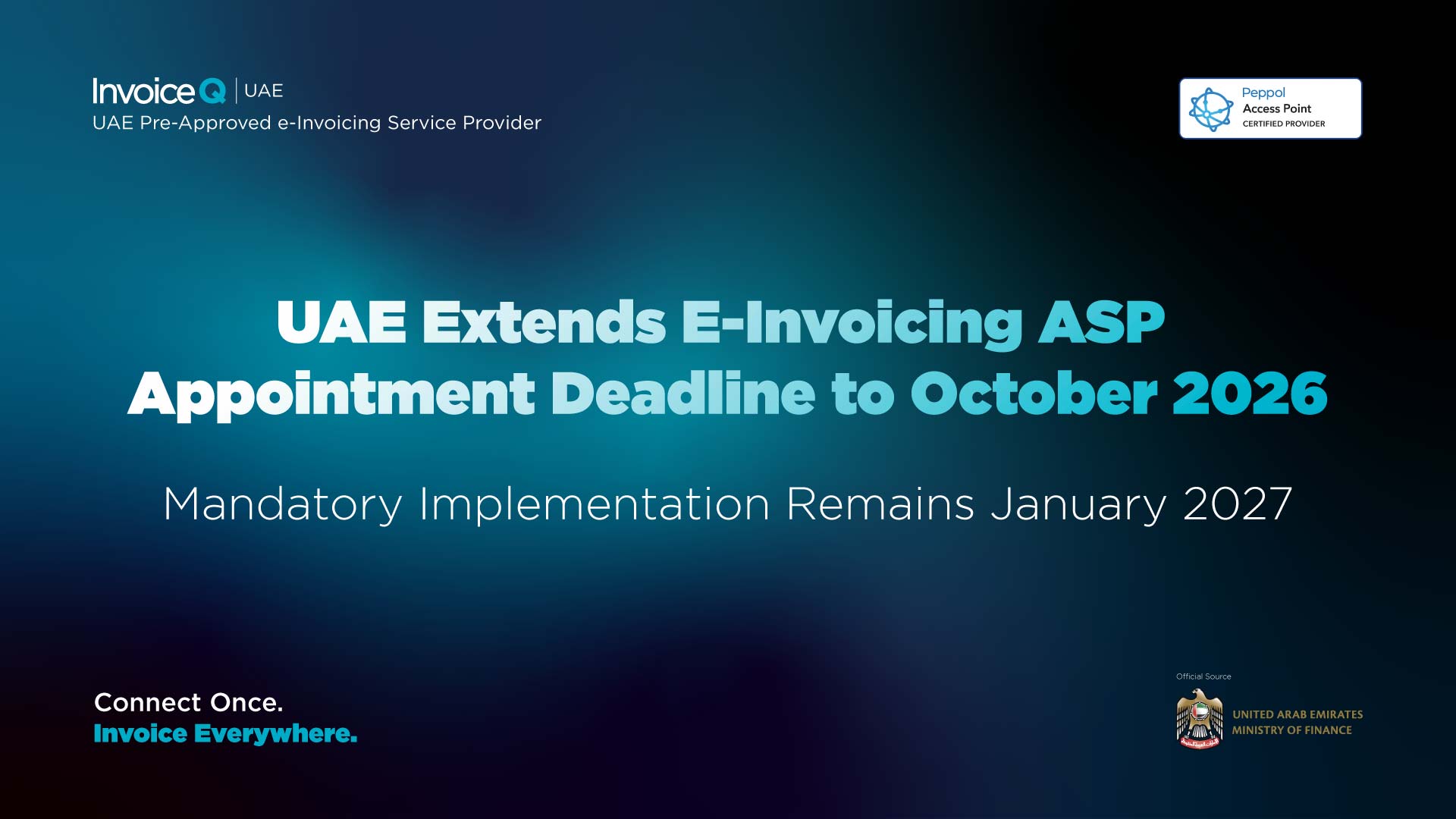
The Ministry of Finance (MoF) officially announced targeted amendments to the UAE e-Invoicing framework, including an extension of the deadline for appointing an Accredited Service Provider (ASP).
Under the updated decision:
• The ASP appointment deadline has been extended from 31 July 2026 to 30 October 2026
• The mandatory implementation timeline remains unchanged: 1 January 2027
• The current requirements apply to businesses with annual revenues exceeding AED 50 million
According to the Ministry of Finance, the extension follows market feedback and aims to:
• provide broader technical options
• increase market competitiveness
• support better pricing flexibility
• strengthen the UAE’s e-Invoicing ecosystem
The Ministry also confirmed that:
• 32 Service Providers have already been approved
• additional providers are currently in the final stages of accreditation
Official Source
What This Means for Businesses in the UAE
The extension does not delay the UAE’s mandatory e-Invoicing rollout.
Instead, it gives businesses additional time to:
• evaluate Accredited Service Providers (ASPs)
• prepare ERP and accounting integrations
• review invoicing workflows
• test technical readiness
• select scalable compliance partners
The UAE continues moving toward a Peppol-based e-Invoicing framework designed to support:
• secure digital invoice exchange
• interoperability
• automation
• tax compliance
• long-term digital transformation
InvoiceQ and The UAE E-Invoicing Ecosystem
InvoiceQ is proud to be listed within the UAE Ministry of Finance’s pre-approved e-Invoicing Service Provider ecosystem, supporting businesses preparing for the UAE’s upcoming e-Invoicing framework.
InvoiceQ is a regional e-Invoicing and compliance platform operating across multiple GCC markets, helping businesses simplify compliance and digital invoice exchange without replacing their existing systems.
With experience across Saudi Arabia, UAE, Jordan, Oman, and other regional markets, InvoiceQ supports:
• ERP integrations
• POS integrations
• API and middleware connectivity
• structured invoice transformation
• Peppol-ready interoperability
• onboarding and compliance enablement
InvoiceQ works with businesses using:
• SAP
• Oracle
• Microsoft Dynamics
• QuickBooks
• Xero
• Shopify
• POS systems
• custom ERP environments
Why This Announcement Matters
The UAE’s latest update signals:
• increasing market maturity
• accelerated ASP ecosystem growth
• rising demand for integrations and onboarding
• stronger focus on interoperability and scalability
The announcement also confirms that businesses should continue preparing immediately, despite the ASP appointment extension.
Companies that start early will have more flexibility in:
• provider selection
• ERP readiness
• implementation planning
• operational testing
• long-term scalability
How Businesses Should Prepare Now
Businesses operating in the UAE should use this additional preparation period to:
• assess current invoicing workflows
• review ERP and POS readiness
• identify integration requirements
• evaluate compliance partners
• begin technical onboarding early
Preparing early helps reduce:
• implementation delays
• integration complexity
• operational disruption
• last-minute compliance pressure
Businesses should also ensure their systems are ready for:
• structured XML invoices
• ERP/API connectivity
• Peppol interoperability
• secure invoice exchange
• long-term digital compliance requirements
Prepare for UAE E-Invoicing with InvoiceQ
Whether your business operates through ERP systems, eCommerce platforms, retail POS environments, or custom financial systems, InvoiceQ helps simplify the transition toward compliant electronic invoicing in the UAE and across the GCC.
Request Your Free Demo Today